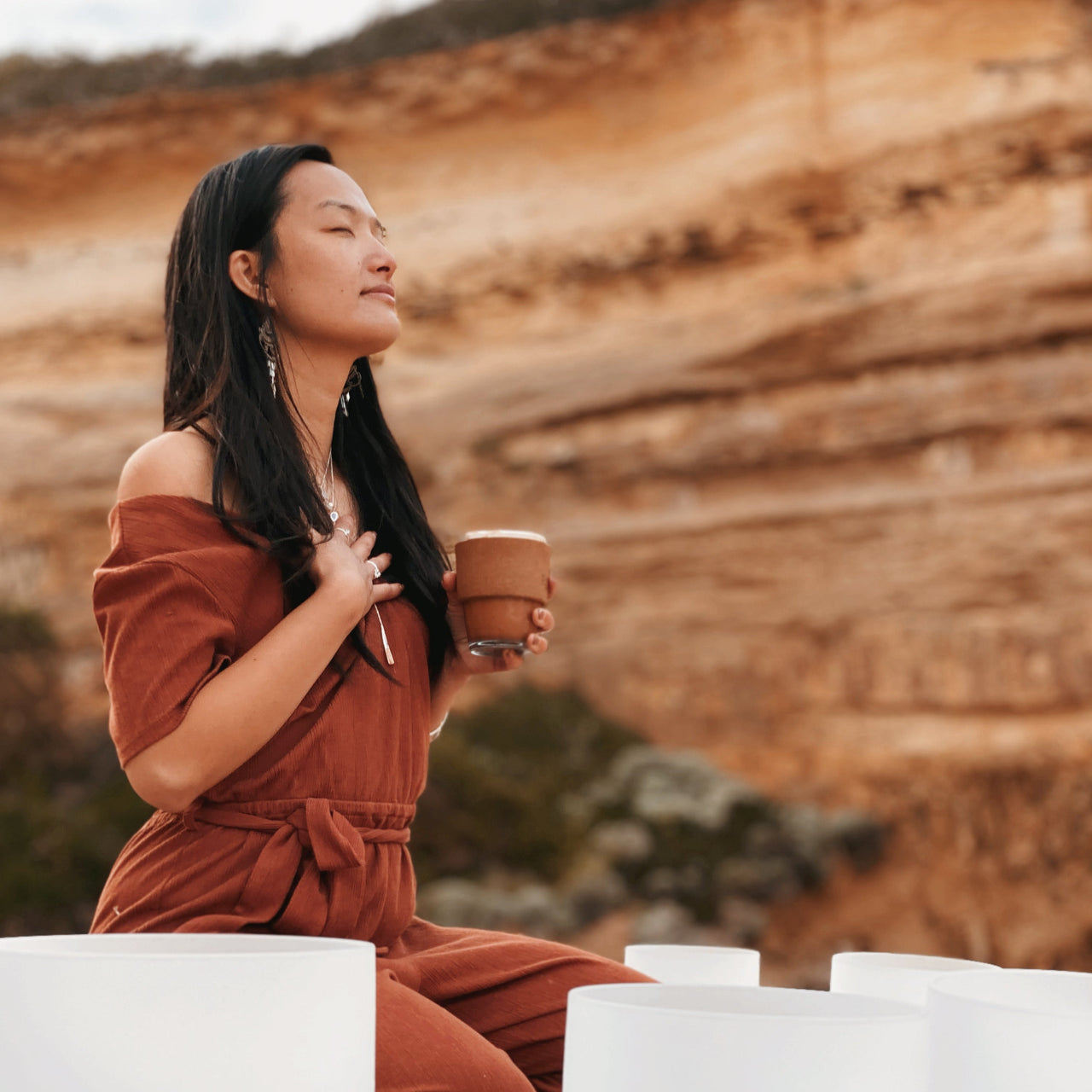









There’s a particular stillness that settles in when you sit with a warm cup of ceremonial cacao. I remember one evening in Melbourne’s north, the rain tapping gently against the tin roof as we gathered in a circle. The facilitator lit a single candle, and the earthy aroma of cacao filled the room. Within minutes, the chatter softened, hearts opened, and what began as strangers sipping from clay cups became a shared journey of connection. Cacao has that way about it—it bridges the ordinary with the sacred.
For thousands of years, this plant has been more than just food. It has been a teacher, a guide, and a medicine that communities turned to in times of transition, prayer, and celebration. To understand why cacao holds such profound spiritual value today, we need to walk back through its origins and the traditions that first gave it meaning.
Modern Cacao Ceremonies And Spiritual Practices

In recent years, cacao has found its way into living rooms, yoga studios, and community halls across Australia. When I first sat in a cacao gathering here in Melbourne, I was struck by how different it felt from the traditional ceremonies I had experienced in Guatemala. There were no temple ruins, no feathered serpent gods being invoked—yet the intention was clear. People were looking for a way to reconnect with themselves, with each other, and with something greater than the daily grind.
This is where cacao is often described as a plant medicine, not in the same vein as strong visionary plants like ayahuasca, but as a gentler guide. Its role today isn’t about preparing warriors for battle or offering currency to the gods. Instead, it’s about helping us drop from the busyness of the mind into the wisdom of the heart.
At local markets like CERES in Brunswick, I’ve met countless people who are curious about cacao’s spiritual uses. Many are searching for tools to ease stress, calm anxiety, or bring a sense of clarity. For them, cacao isn’t an exotic novelty—it’s becoming a trusted companion in their inner work.
How To Hold A Sacred Cacao Ritual At Home Or In Community
Creating a cacao ritual doesn’t require elaborate props or special training. What it does require is presence, respect, and intention. Here’s a simple framework I often share with newcomers who want to bring cacao into their daily life or small circles:
Checklist for a Simple Cacao Ritual
- Prepare the space
- Choose a quiet spot, whether it’s your lounge room, backyard, or a community centre.
- Light a candle or incense to signal the shift from ordinary time to sacred time.
- Some people like to place meaningful items—stones, photos, flowers—on a small altar.
- Make the cacao mindfully
- Heat water gently (never boiling).
- Whisk cacao slowly, stirring in any spices you feel drawn to—cinnamon, chili, or cardamom work beautifully.
- As you stir, breathe in deeply and consider it part of the ceremony.
- Set your intention
- Speak or whisper what you want to invite or release.
- A common practice is to “feed” this intention into the cup before sipping.
- Drink with awareness
- Take small sips, feeling the warmth spread through your chest.
- Notice emotions or sensations that arise—sometimes tears, sometimes laughter.
- Deepen the experience
- Sit in meditation, play music, journal, or move your body gently.
- In group settings, sharing circles are powerful, offering space to voice what has surfaced.
- Close the ritual
- Blow out the candle, thank the cacao, and take a moment of silence.
Integration often continues in the hours or days that follow—keep your journal nearby.
In Melbourne, I’ve seen people adapt cacao rituals for all sorts of settings—from intimate morning practices before work to larger gatherings at festivals. One friend holds a monthly cacao and sound bath session, combining cacao’s grounding energy with the resonance of gongs and singing bowls. Another runs small women’s circles where cacao accompanies intention-setting for the lunar cycle.
The beauty of cacao lies in this adaptability. While rooted in ancient reverence, it also meets us exactly where we are—in suburban homes, by the Yarra River, or even during a rainy winter evening when a warm, heart-opening drink feels like just the medicine we need.
Spiritual Benefits Of Cacao In Ceremony
Heart Opening And Emotional Release
One of the most consistent things I’ve noticed when sharing cacao in circle is how quickly people drop into their hearts. I’ve watched hardened tradies, who came along at the invitation of a partner, soften within half an hour. Tears that hadn’t been shed in years found their way down weathered cheeks. That’s the quiet power of cacao—it loosens the armour we carry around the heart.
In many traditions, cacao is linked to the heart chakra, the energetic centre of compassion and connection. People often describe a gentle warmth spreading through the chest, as if the drink is stoking an inner fire. This makes it an ally in processing grief, releasing long-held emotions, or simply rediscovering joy.
In community circles across Victoria, I’ve seen cacao used during grief rituals, supporting people who have recently lost loved ones. It doesn’t take the pain away, but it holds space for it—like a patient friend who sits beside you without judgement.
Cacao For Meditation, Clarity, And Self-Discovery
Many people come to cacao because they struggle with meditation. Sitting still with the mind can feel impossible in a city like Melbourne, where life moves fast and attention is constantly pulled outward. Cacao changes the equation.
With its blend of theobromine and anandamide, cacao brings both focus and calm. It sharpens attention while softening the edges of thought, making it easier to slip into meditative states. I often notice this myself when journaling after cacao; the words seem to flow more honestly, unfiltered by self-doubt.
For those seeking self-discovery, cacao can be a steady guide. A woman I worked with once described how, after years of ignoring her creative side, a cacao practice helped her pick up the paintbrush again. “It was like the cacao whispered, ‘It’s safe to express yourself now,’” she said. Stories like this aren’t rare—they’re part of why so many people return to the practice.
Cacao As A Tool For Divine And Ancestral Connection
Beyond emotional release and clarity, cacao has long been seen as a bridge to the divine. In Mayan and Aztec cosmologies, it connected mortals with gods. Today, people use cacao to connect with their higher self, ancestors, or spiritual guides.
In shamanic settings, cacao often accompanies drumming or chanting, guiding participants into altered states of consciousness. I once joined a shamanic journey in the Dandenong Ranges where cacao was served before a night of drumming. The sound seemed to travel deeper, each beat resonating through the body like an ancient heartbeat. Many participants reported visions, ancestral encounters, or profound messages.
Of course, not every ceremony leads to visions. Sometimes the connection is quieter—a deep sense of peace, a sudden clarity about a decision, or the feeling of being held by something greater than oneself. Whether subtle or dramatic, cacao consistently acts as a gentle doorway into spiritual connection.
The Science Behind Cacao’s Spiritual Power
Key Psychoactive Compounds That Support Ceremony
While the ceremonial use of cacao feels deeply mystical, its effects aren’t purely symbolic. Science gives us a peek into why this plant shifts our state of being so profoundly.
- Theobromine is often described as cacao’s energetic engine. Unlike caffeine, which spikes energy and can leave you jittery, theobromine delivers a slow, steady lift. It increases blood flow, particularly to the heart and brain, which may explain the sensation of expansion many people feel in a ceremony. When I drink cacao before leading meditation, I notice my body relaxes while my mind stays alert—a balance I rarely get from coffee.
- Anandamide, sometimes called the “bliss molecule,” interacts with the body’s endocannabinoid system, inducing feelings of calm, contentment, and gentle euphoria. I’ve seen participants describe it as “a hug from the inside out.”
- Phenylethylamine (PEA) is often linked with the chemistry of falling in love. In cacao ceremonies, people report heightened awareness, deeper empathy, and a rush of joy that feels both grounding and uplifting.
- MAO inhibitors in cacao prolong these effects, allowing the compounds to stay active in the body longer, making the experience feel both profound and lingering.
Together, these compounds don’t push the mind into altered states the way strong entheogens do, but they create fertile ground for meditation, introspection, and heart-centred connection.
Nutrients And Energetics In Cacao
Beyond the psychoactive compounds, cacao is nutritionally dense, and that physical nourishment contributes to its role as a plant medicine.
Here’s a snapshot of what ceremonial cacao brings to the table:
|
Nutrient / Compound |
Spiritual & Physical Effect |
|
Magnesium |
Calms the nervous system, supports heart health, enhances mental clarity—ideal for meditation. |
|
Iron |
Boosts energy and concentration, important for grounding during ceremony. |
|
Zinc & Copper |
Support immune function and energy balance, aligning body with ritual endurance. |
|
Potassium |
Helps regulate blood pressure, keeping participants balanced during deep inner work. |
|
Antioxidants (Flavonoids) |
Protect against oxidative stress, linked with clearer thinking and resilience. |
From my own practice, magnesium is the standout. After a cup of cacao on a cool Melbourne evening, I often feel tension drain from my shoulders, my breath slowing without effort. This physical release creates space for spiritual exploration.
Some facilitators also speak of cacao’s energetic vibration. While harder to measure with science, many describe its frequency as resonating with the heart’s natural rhythm. In ceremony, that resonance is less about the molecules themselves and more about how we feel them—warmth spreading through the chest, grounding energy settling into the body, and a heightened sensitivity to subtle shifts within.
Ethical And Cultural Considerations In Cacao Rituals
Navigating Cultural Appropriation Respectfully
As cacao ceremonies gain traction across Australia, it’s essential to pause and reflect on where these practices come from. The ceremonial use of cacao is deeply rooted in Mesoamerican cultures, and while many of us in the West are drawn to its heart-opening qualities, there’s a risk of lifting it out of context and reshaping it to suit modern tastes.
I’ve seen this first-hand at certain wellness events in Melbourne, where cacao is presented as though it were a long-lost Indigenous “chocolate shaman” tradition. In truth, Mayan spiritual leaders themselves have said that stand-alone cacao ceremonies were rare, and when cacao was used, it was part of a broader ritual context involving prayers, chants, or offerings.
When we take a sacred plant and repackage it without acknowledging its lineage, we step into the territory of cultural appropriation. It can turn a practice meant to honour spirit and community into a commodity. As someone who has sat with Mayan teachers in Guatemala, I feel a responsibility to name this. We can drink cacao in ways that are modern and personal, but we should never pretend those ways are “traditional” when they are not.

Practising Cacao Rituals With Integrity
So how do we ensure our cacao practices are grounded in respect? For me, it comes down to intention, sourcing, and acknowledgement. Here are some guiding points I’ve found useful in my own facilitation:
Ways to Practise with Integrity
- Source ethically: Choose cacao grown by small-scale farmers, with transparent supply chains. The closer the money stays to the growing communities, the better.
- Acknowledge the lineage: Verbally honour the Indigenous stewards of cacao when you serve it. Something as simple as recognising Mayan and Aztec traditions can shift the energy from consumption to reverence.
- Be mindful with language: Instead of calling modern gatherings “ceremonies,” some facilitators use terms like “cacao circle” or “cacao journey” to distinguish them from traditional rites.
- Keep it trauma-informed: Recognise that cacao can stir deep emotions. Facilitators should create safe, consent-based spaces.
- Give back: Support regenerative farming, community initiatives, or education projects in cacao-growing regions.
In practice, this could look like a Melbourne-based facilitator beginning a circle by naming the traditional custodians of the land we sit on here in Australia, while also acknowledging the Indigenous cultures of Mesoamerica, who first worked with cacao. It’s about weaving respect across two continents.
Ethical practice doesn’t stifle our spiritual connection—it deepens it. When we drink caca,o knowing the hands and histories behind it, the experience becomes richer. It reminds us that spirituality isn’t just about inner journeys; it’s also about the choices we make in the outer world.
How Ceremonial Cacao Differs From Commercial Chocolate?
Processing And Potency
When people first taste ceremonial cacao, they’re often surprised—it’s strong, bitter, and earthy, nothing like the chocolate bars from the supermarket. That difference isn’t an accident; it’s in the way the plant is prepared.
Ceremonial cacao is minimally processed. The beans are fermented, dried, sometimes lightly roasted, then stone-ground into a paste. This preserves not only the nutrients but also what many describe as the plant’s “energetic integrity.” When I worked alongside farmers in Peru, I saw how much care went into each step. Fermentation was slow, patient—nothing rushed, nothing industrialised.
Commercial chocolate, by contrast, is heavily refined. Beans are roasted at high temperatures, alkalised, mixed with sugars, dairy, emulsifiers, and stabilisers. By the time it reaches the shelf, much of cacao’s potency—both nutritional and spiritual—has been stripped away.
That’s why ceremonial cacao feels so different in the body. A single cup can bring focus, clarity, and emotional release, while a bar of milk chocolate is more likely to give a sugar crash than a spiritual awakening.
Purpose And Sourcing
Another key difference lies in why we consume cacao. Commercial chocolate is designed for pleasure, convenience, and profit. It’s a snack, a treat, a comfort food. There’s nothing wrong with enjoying it, but its purpose is primarily indulgence.
Ceremonial cacao, on the other hand, is taken with intention. Every step—from preparation to drinking—is treated as part of a ritual. Its purpose is connection: to self, to others, to the divine.
Sourcing also matters. High-quality ceremonial cacao is often grown on small farms using regenerative practices, with respect for the communities and traditions tied to the plant. Commercial chocolate, unfortunately, has a long history of unsustainable farming, unfair labour, and environmental damage.
Here’s a simple comparison:
|
Aspect |
Ceremonial Cacao |
Commercial Chocolate |
|
Processing |
Minimal, stone-ground, nutrient-rich |
Highly processed, refined |
|
Ingredients |
Pure cacao, sometimes with spices |
Sugar, dairy, emulsifiers, additives |
|
Purpose |
Spiritual practice, emotional healing |
Pleasure, snacking, profit |
|
Sourcing |
Small-scale, ethical, sustainable |
Often large-scale, industrial, questionable ethics |
In this way, choosing ceremonial cacao is as much an ethical decision as it is a spiritual one. When I drink it, I feel not only the medicine of the plant but also the labour, care, and respect of the people who brought it into being.
Ceremonial cacao continues to hold its place as both a sacred plant and a practical ally for modern seekers. From its ancient role in Mayan and Aztec rituals to its revival in community circles across Australia, cacao invites us to pause, connect, and honour the heart. It isn’t simply a drink—it’s a ritual, a medicine, and a reminder of our relationship to the land and each other.
As with any sacred practice, integrity matters. Ethical sourcing, cultural respect, and mindful use allow us to carry forward this tradition without stripping it of its roots. When approached with reverence, cacao becomes more than a cup of warm liquid—it becomes a bridge to self-discovery, emotional release, and spiritual connection.